Not every art space has 100 + years of history to boast, but that is what gives OPAL its unique energy. Generations of artists have made art here and created this place.


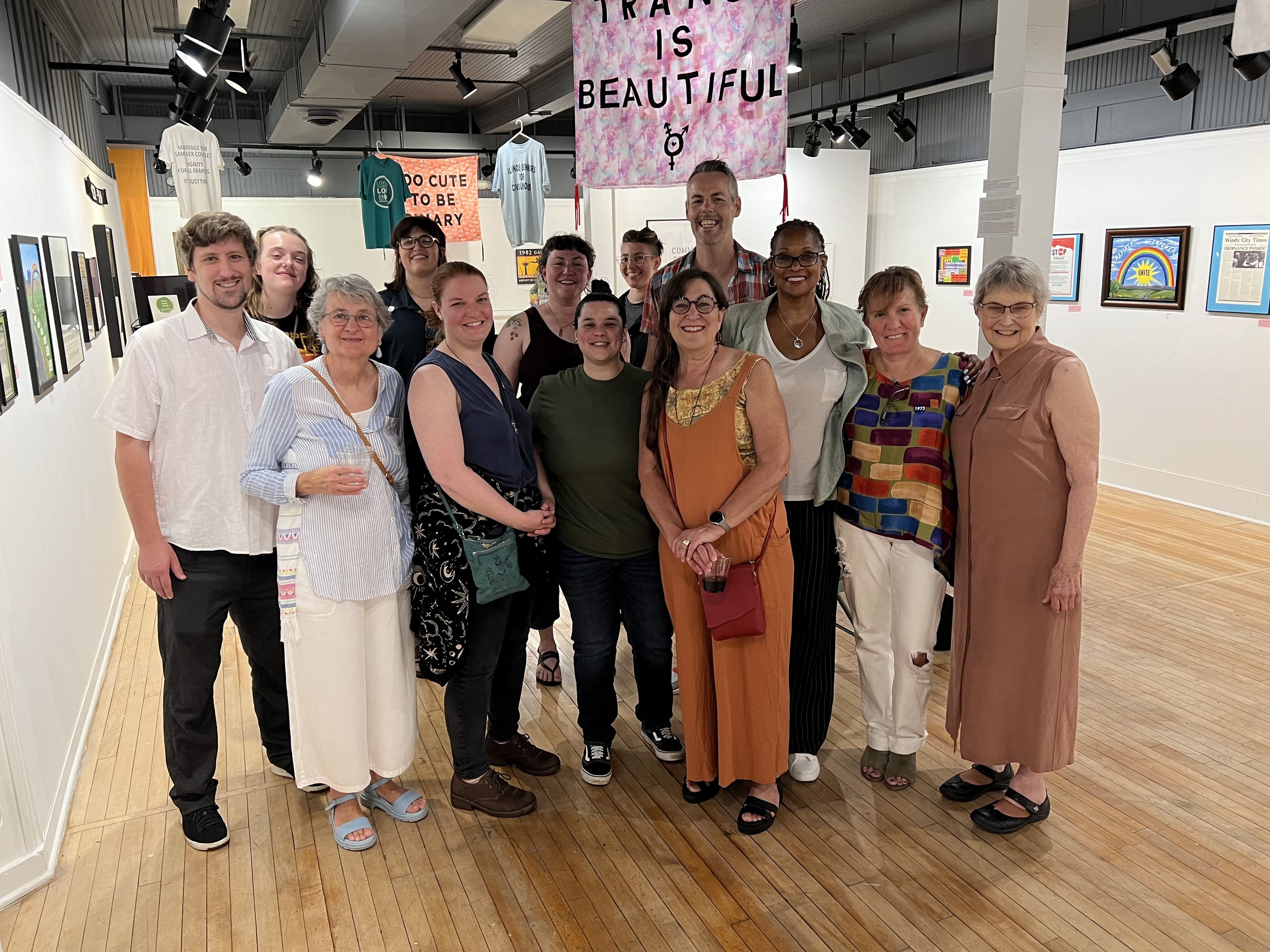


Our History
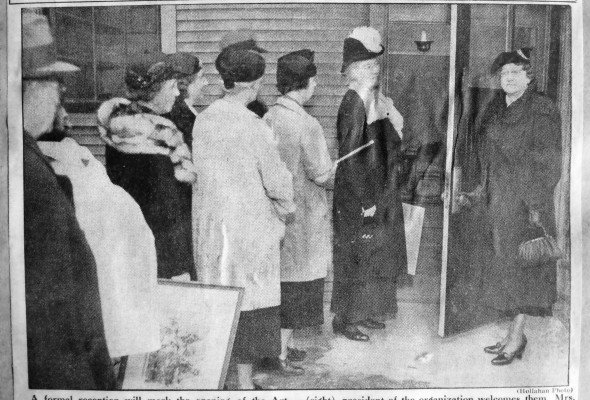
Founding Members
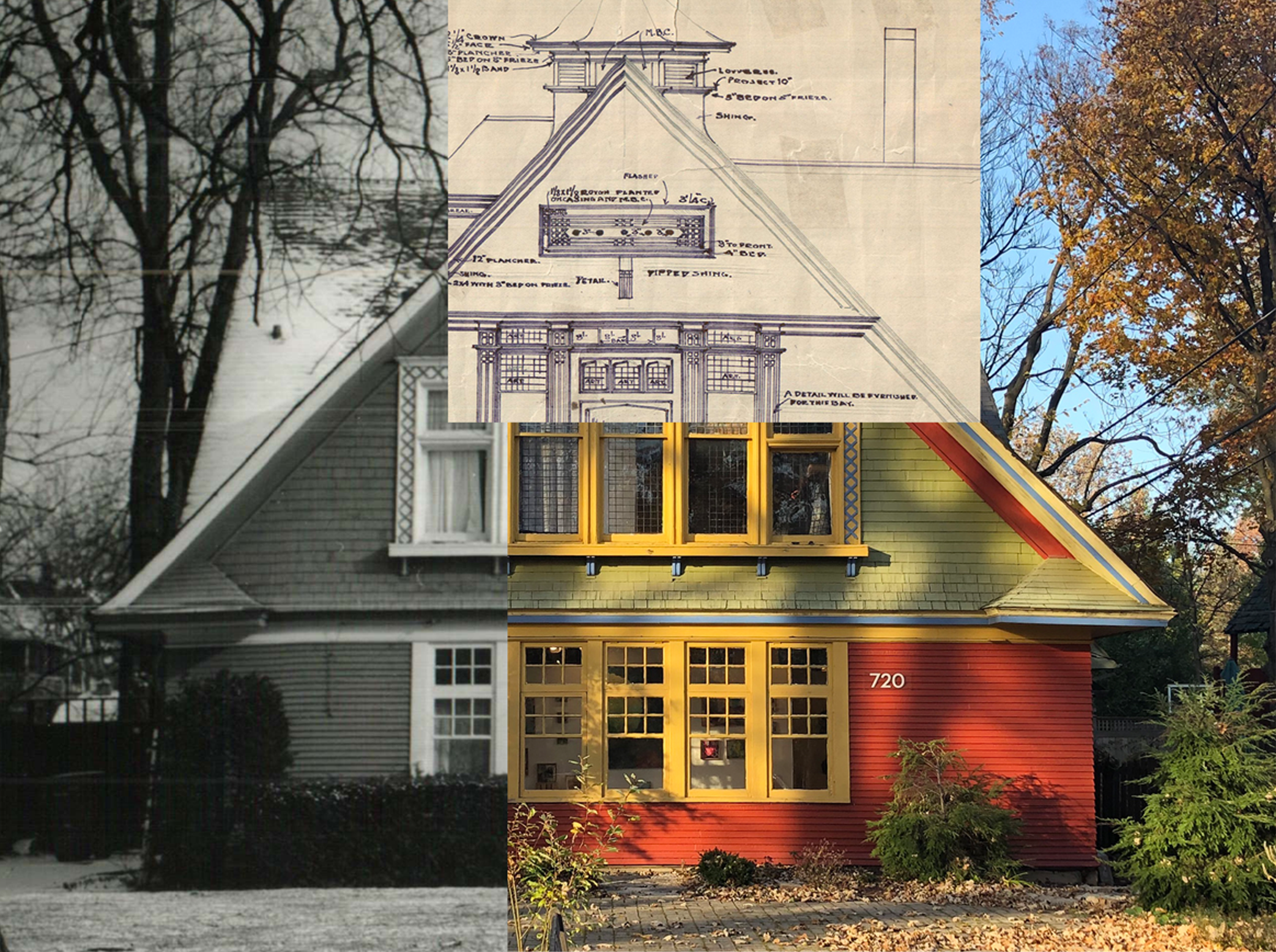
By the Years

An Artist's Life: Carl R. Krafft

Yearbooks
Our History

Established 1921
The Oak Park Art League was founded after World War I, during a time when rapid changes were occurring in the American art world. Picasso, Cezanne, Matisse and other artists of the European avant-garde were entering the dialogue and visual vocabulary of artists, collectors and museums after the 1913 New York Armory Show and subsequent exhibition at the Art Institute of Chicago.
In response, new art institutions were organized to provide venues for artists to discuss the radical new art forms of these European artists. In Chicago, the Renaissance Society at the University of Chicago (1915) and the Arts Club of Chicago (1916) were formed. And in 1919, artist Carl R. Krafft and other Chicago area artists began meeting in Krafft’s Austin home, which in 1921 would become formally known as The Austin, Oak Park, and River Forest Art League; renamed the Oak Park Art League (OPAL) in 1970.

As a place for artist collaboration, the Art League became a mecca for notable regional artists of the time, gathering frequently for lectures and artist demonstrations. Outgrowing Krafft’s home, the Art League rented Frank Lloyd Wright’s studio in the mid 1920’s and the 19th Century Women’s Club in the early 1930’s. Burgeoning membership necessitated a search for a permanent home for the Art League and a fundraising campaign ensued. One of the many contributors included Ernest Hemingway’s mother, Grace Hall Hemingway, a member and an accomplished artist. In 1937, the Art League purchased its current building, a carriage house and stable belonging originally to The Palmer estate, the Victorian home that still stands to the west of the building. Designed in 1902 by Oak Park architect, Eben Ezra Roberts, the carriage house was converted to the gallery and studio classroom it is today by Roberts, also a skilled painter and an Art League member.
Prior to its use as the Art League (1913 - 1917) the building was used as a private school and dance studio by the famous choreographer Doris Humphrey. Roberts, a contemporary of Frank Lloyd Wright, designed the carriage house with similar characteristics as Wright’s first home. The Oak Park Art League is located in the center of Oak Park’s Historic District and is withing walking distance from Frank Lloyd Wright’s famed studio and Ernest Hemingway’s birth home. OPAL’s gabled A-frame structure is an important landmark and lends to a tri-part dialogue about the early 20th century regional influences in art, architecture, and literature that continue to define Oak Park’s cultural landscape today.
If you have a painting or artwork by any of our founding members, we would be interested in seeing it. We do maintain a permanent collection and accept artwork donations by past members and founders.
Please contact us if you are interested in making a donation.
Founding Members
-
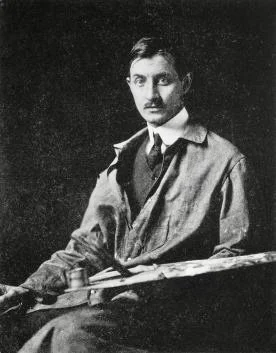
Carl R. Krafft (1884 - 1938)
Mr. Krafft is the founder and first President (1921-1922) of the Oak Park Art League. He exhibited throughout the country and received many awards for his work. Galleries which have exhibited his pictures are: the National Academy in New York, Pennsylvania Academy, Philadelphia, Carnegie Institute, Pittsburgh, The Corcoran Gallery of Art, Washington: the city Museum of St. Louis, The Cincinnati Art museum and other in the Chicago Area including the Richard Love Gallery. Mr. Krafft received a wide range of prizes and awards during the 1920’s and 1930’s in the Chicago Metropolitan area. His work can be found locally in many collections such as the Ryerson Collection, the Art Institute of Chicago; The Nineteenth Century Women’s club, Oak Park, the Oak Park club, The Historical Society of Oak Park and River Forest: Rosary College and the Valentine Collection, Chicago. There was a memorial exhibit of Mr. Krafft’s work at the Art Institute after his death in 1939.
-

Alfred Juergens (1866 - 1934)
Mr. Juergens graduated from the Art Institute of Chicago, after he attended the Munich Royal Academy. Member of the Chicago Society of Artists, Munich Society of Artists, Artist Association of Germany, Societe Internationale des Beaux Arts. Among his awards were: Silver Medal Madrid and Munich Art. Art Institute of Chicago 1914, Bronze Medal Panama Pacific Exposition, San Francisco 1915, William Randolph Hearst prize Art Institute, Buisness Men’s Art Club Prize Art Institute 1923. Represented in St. Paul Church, Chicago: Cliff Dwellers Club, Chicago: Municipal Gallery, Art Institute of Chicago, and the Women’s Club and West End Woman’s City Club in Chicago. He is best known for his paintings of landscape and still life in both oils and watercolors.
-

Holgar Jensen (1880 - 1943)
A painter in oils and watercolor, Mr. Jensen was born in Denmark. He studied at Smith’s Academy of Art, The Art Institute of Chicago and the Academy of Fine Arts. He served as first secretary of the Art League and was on the Board of Directors. He exhibited at the Art Institute in both local and American shows and also exhibited in St. Louis, Davenport, Springfield, Milwaukee, Detroit, and other Mid-western cities. Mr. Jensen’s work is represented in several Chicago Galleries, Gary, Indiana and River Forest schools. He was and exhibiting member of the Association of Chicago Painters and Sculptors, Pallete and Chisel Academy of Fine Arts and The Chicago Galleries Association. Academy of Fine Arts and The Chicago Galleries Association. Awards include: Austin, Oak Park, and River Forest Art League Silver Medal 1929: Pallette and Chisel Academy of Fine Arts Gold Medal 1934.
-

Grace Hall Hemingway (1872 - 1951)
A native of Chicago, Mrs. Hemingway was first interested in music as a career. After training for grand opera, she was accepted for the Metropolitan and made her debut in Madison Square Garden under to baton of Andon Seidl and the New York Symphony Orchestra. She married and had six children; the writer, Ernest Hemingway being one of them. At the age of 52 she turned to painting and held thirty, one-man shows in France, India, China, England, and South America. Mrs. Hemingway was a member of the Oak Park Art League for 18 years, serving as a director for 6 years, She was a member of the All Illinois Society of the Fine Arts, Michigan Arts, National Society of Artists, Chicago Society of Artists; was listed in American Women 1937-38, Who’s Who in American Art and the New International Art.
-
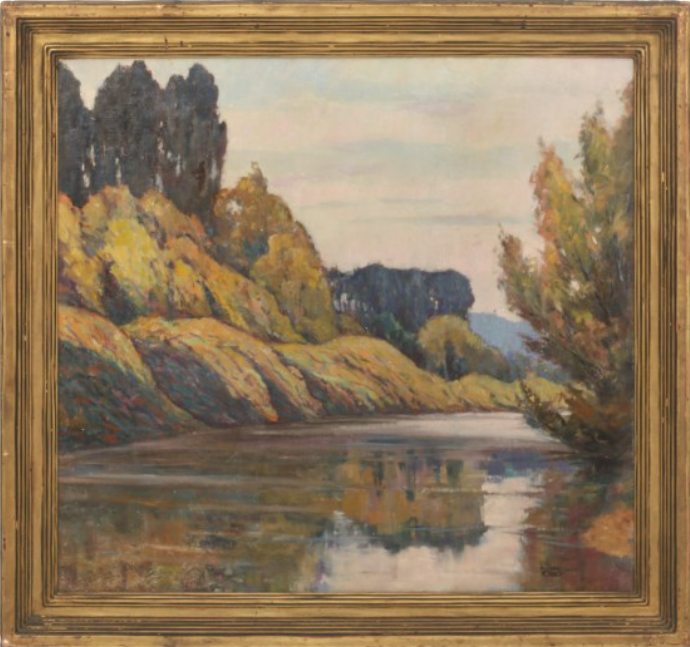
Ellsworth Young (1866 - 1952)
A charter member of the Art League and First Treasurer, Mr. Young was a Board member and teacher of landscapes in watercolor and oils at the Art League School. Born and educated in Iowa, he studied at the Art Institute of Chicago. He was an Illustrator for the Denver Times, did freelance Illustration in New York and became an illustrator for the Chicago Tribune where he illustrated a daily feature. He illustrated many books and magazines. In 1907 he had two pictures in the American Artists’ Exhibition. He also exhibited at the Chicago Galleries Association, Carson Pirie Scott and Co., Marshall Field and Co., All Illinois Society of the Fine arts and in various cities of the Midwest and in New York at the Fine Arts Society Galleries. His work is represented in permanent collection of Illinois State Museum, Springfield, Western Ill. State Teacher College, Macomb, ILL, Northern State Teachers College, DeKalb, Ill, and numerous other schools and colleges in the area. He was awarded the Chicago Galleries Association members prize in 1927. A member of the Association of Chicago Painters and Sculptors, Chicago Galleries Assn., Pallette and Chisel Academy and All Illinois Society of the Fine Arts.
-
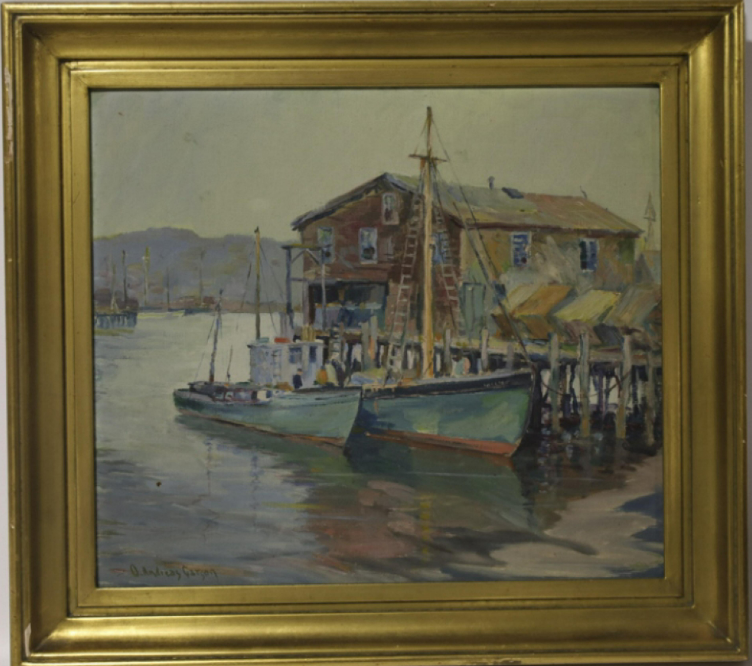
Etta Garson (1898 - 1965)
Born in Oak Park, Ms. Garson studied at Julien Academy, Paris; London School of art: Chicago Academy of Fine Arts. A graduate of the Art Institute of Chicago, she exhibited in the Century of Progress Exhibition and other shows throughout the Chicago Metropolitan area. Mrs. Garson taught art in the public schools as well as, illustrated and wrote children’s books.
-
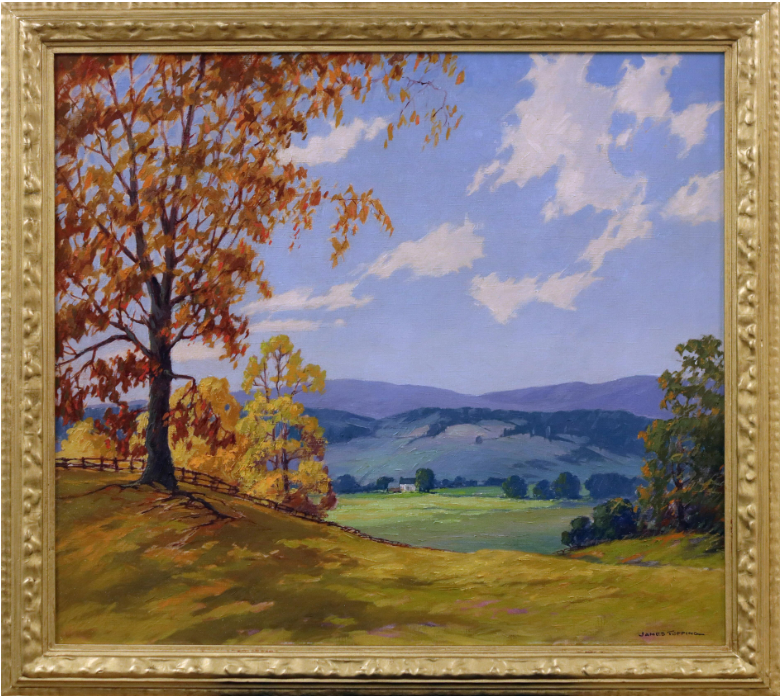
James Topping (1879 - 1948)
Mr. Topping was born in England and received his early art training there. He received an honorable mention for drawing at the Moor Road School. He became a member of the Cumberland Society of Arts and Crafts and studied at the Art Institute of Chicago, making art his career. M.r Topping exhibited at the National Exhibition of American Art, New York; Pennsylvania Academy of Fine Arts, Philadelphia; Boston Art club; Concord Art Association; Art Association, Art Institute of Omaha, Nebraska; Chicago Galleries; Hoosier Salon and the Art Institute of Chicago. Among his numerous awards are ; Municipla Art League prize, 1923; Robert Rice Jenkins prize, Art Institute, Chicago -1924; Chicago Galleries Association, 1926; Bronze Medal, Art League 1930. His work is represented in permanent collections of State Museum of Fine Art, Springfield, Mo.; Joslyn Memorial, Ohama; Palette and Chisel Club, Chicago; First Methodist Church, Oak Park and public schools in Chicago and various suburbs. He was a charter member of the Oak Park Art League; served as director and Exhibition Committee Chairman.
-
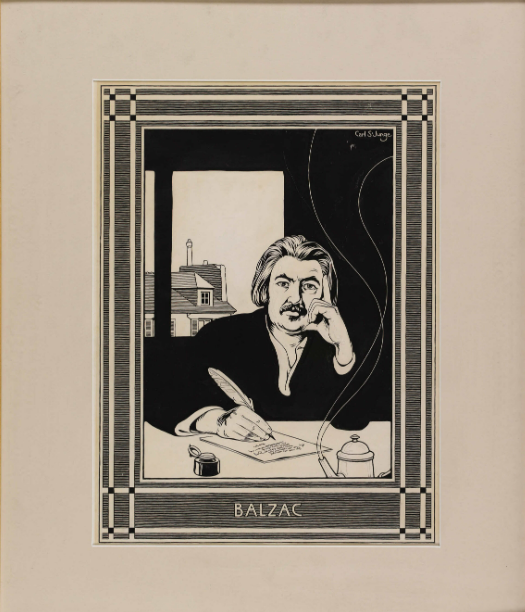
Carl Stephen Junge (1886 - 1972)
Born in Stockton, California, Mr. Junge studied at Hopkins Art Institute, San Francisco, Julien Academy, Paris and London School of Art. At the age of 17, he was on the art staff of the San Francisco Examiner. A painter in oils and watercolors, illustrator and a designer of book plates., he exhibited at the Art Institute of Chicago; Carnegie Institute, Pittsburg; Toledo Museum of Art, Toledo, Ohio; National arts Club, New York; and the Hoosier Salon. Received awards from; American Book Plate Association International 1926, 1936. Works in permanent collections at National Library, Washington D.C, British Museum, London; Metropolitan Museum, New York; Museum of Fine Arts, Boston; John H. Vanderpoel Art Gallery, Chicago. Mr. Junge was a charter member of the Art League and author of Book Plates, 916 and Ex Libris, 1935.
-
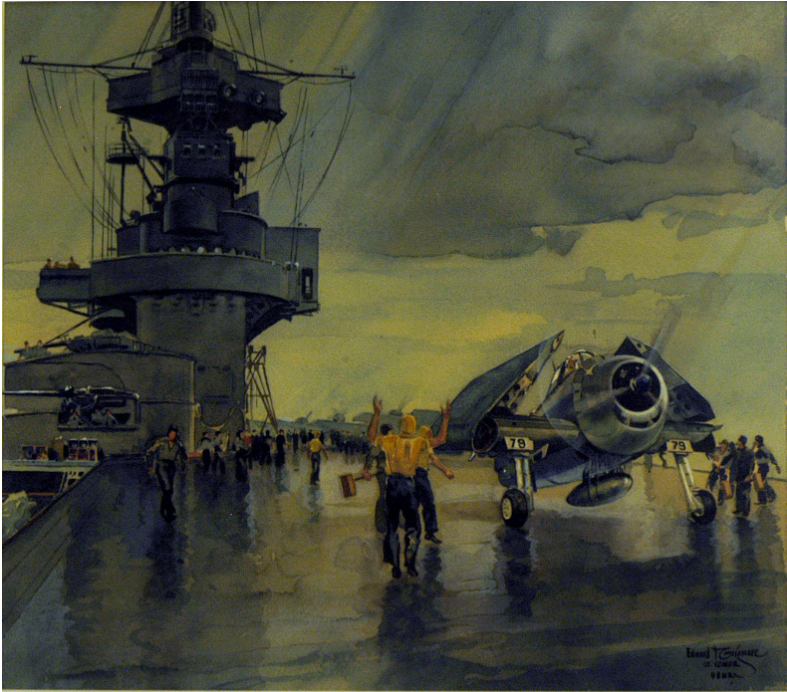
Edward Grigware (1889 - 1944)
Mr. Grigware was charter member of the Art League. He was born in Spokane, Washington and attended the Chicago Academy of Fine Arts; received awards in the Hoosier Salon; the Chicago Art Institute, The palette and Chisel Academy of Fine Arts; and the Chicago Art Review prize. In 1935 he was appointed Naval Painter and received the commission of Lieutenant Commander, DV (s) U.S.N.R. Mr. Grigware established an art colony and School of Weatern Art at Cody, Wyoming where he spent several months later.
-
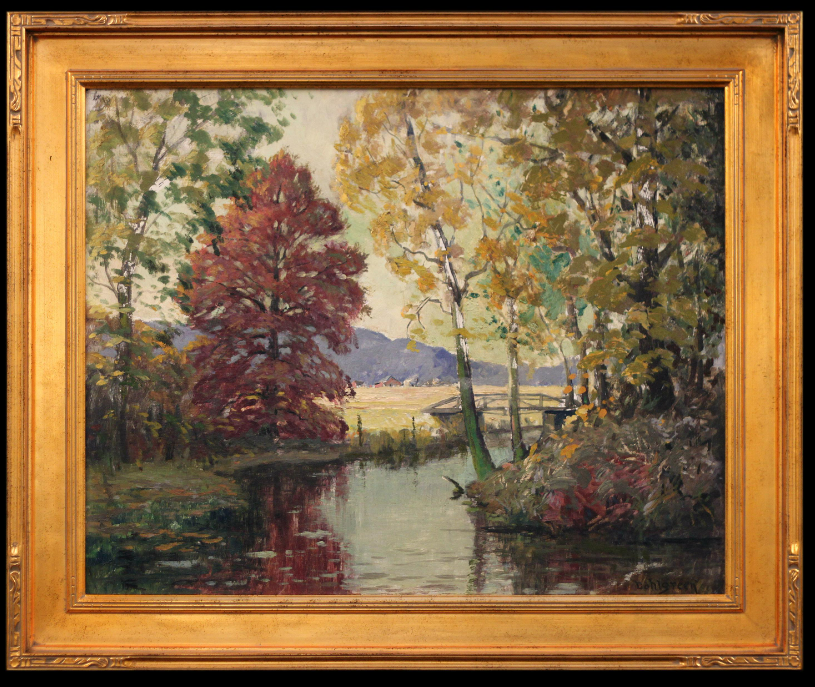
Charles Dahlgreen (1864 - 1955)
A Painter and Etcher, born in Chicago in 1864, Mr. Dahlgreen studied for two years in Dusseldorf, Germany and received first prize for still- life painting. In 1904 he entered seriously upon his art career, studying at the Chicago Academy of Fine Art and at the Art Institute of Chicago. He was awarded First prize for landscape composition in the Art Students League Exhibition in Chicago. In 1909, He went abroad to study the old master in England, Holland, Belgium, Italy and France where he exhibited in the Paris Salon of 1910. At the Panama Pacific Exposition he received honorable mention for his etchings. His aquatint “A Note in Pattern” was chosen from the Century of Progress Exhibition at the Art Institute of Chicago as one of fifty etching to make a circuit exhibition of leading museums of the United States. He received awards at the Art Institute of Chicago in 1919, and 1931; Municipal Art League 1920, Chicago Galleries, 1926 and numerous other awards. He is represented in the Smithsonian Institution and Congressional Library, Washington D.C; New York Public Library; Collection for encouragement of Local Art in Chicago; in the public schools of Chicago, and in private collections in the United States, France Englande, south America, Germany and Japan.
-
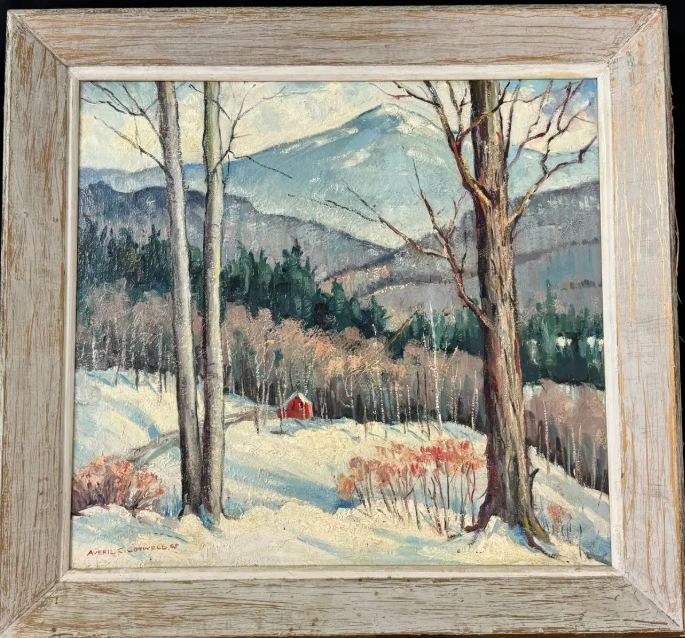
Averil Courtney Conwell (1894 - 1990)
Mrs. L. D Conwell was a graduate of the Art Institute of Chicago and attended the Chicago Academy of Fine Arts. She maintained a studio in the Auditorium Tower, Chicago doing commercial work and later newspaper work; joined the Art League in 1928 as an Artist Member; served on the Board of Directors and as Program Chairman from 1930- 1938, inaugurated the Sunday evening supper program that was so popular during the 30’s and 40’s. She was first vice president in 1937-39. Mrs. Conwell also started the children’s classes in 1938 and taught them herself until leaving for Lake Placid, N.Y in 1944. Mrs. Conwell has exhibited at the Art Institute of Chicago, Findlay Gallery and Grables Gallery; has done large murals in St. Mary’s Hospital in DeKalb, Illinois, Mt. Carmel Academy Clinton, Iowa and many locations in New York State.
-
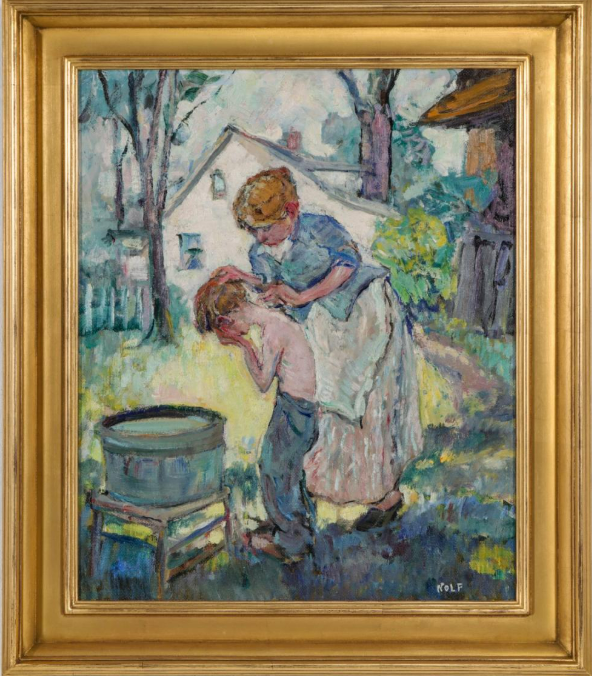
John Thomas Nolf (1872 - 1950)
Born in Allentown, PA, Nolf toured the United States as a morning newspaper correspondent from the age of 18-26. He became an advertising artist and cartoonist affiliated with leading advertising agencies. He studied at the Art Institute and Smith Art Academy. Mr. Nolf was a cartoonist and contributor to Inland Printer for 20 years. He exhibited at the Art Institute of Chicago, both the American and Chicago Shows, the National Academy, New York; Pennsylvania Academy, Philadelphia; Los Angeles Pan American Show. He was awarded several prizes from annual shows at the Art Institute. Mr. Nolf was a charter member of the Oak Park Art League and served on the board of directors for many years in addition to teaching adult classes. His work can be found in many prominent collections such as; the Union League Men’s Club, Oak Park & River Forest High School, New Trier High School, Winnetka; the University of Chicago Alumni Collection and Chicago Public School Art Society Collection.
-
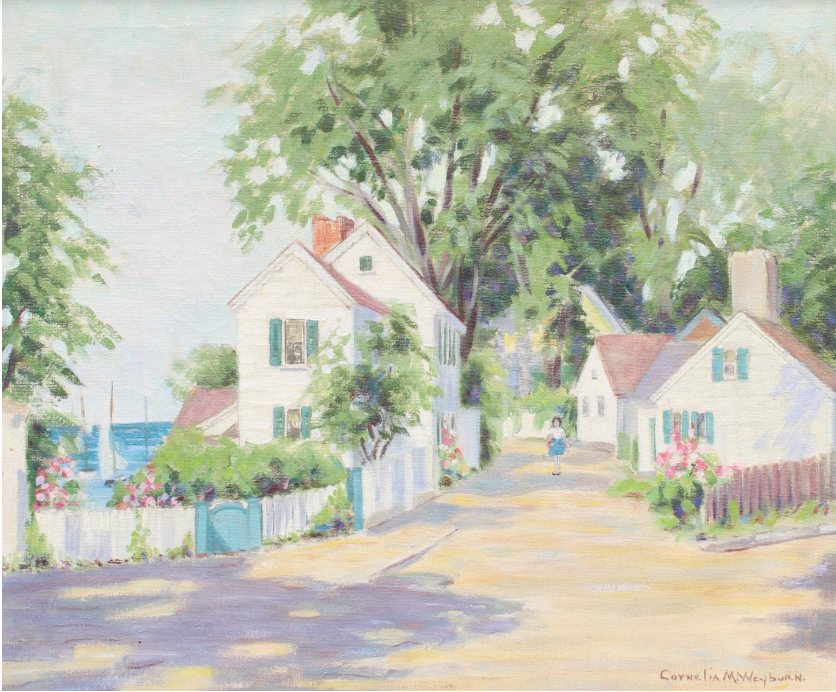
Cornelia Weyburn (1878 - 1972)
Graduate of the Art Institute of Chicago and teacher there for 6 years she was one of the first exhibitors at the Oak Park Art League. She served as first Vice President and Director at the Art League, taught Tuesday Still Life classes or 4 years. She exhibited at the Art Institute of Chicago, All Illinois Society of the Fine Arts, Chicago Galleries Assoc. and Findlay Galleries. Ms. Weyburn was a Member of the Art Institute of Chicago, Gordon Club, the Arts Club of Chicago, All Illinois Society of the Fine Arts.
-

Eben E. Roberts (1866 - 1943)
E.E. Roberts is an architect of some prominence and a contemporary of Frank Lloyd Wright. He was born in Boston and received his early education in New Hampshire. His father, who was an illustrator, draftsman and art teacher was his first art teacher. He studied engineering and architecture at Tilton Seminary; after graduating he gained practical experience as a supervisor and time keeper of construction on buildings in Chicago. Mr. Roberts came to Oak Park in 1888 and opened an architectural firm in 1891. During his career he spent his spare time painting and became an early member of the Art League. In Addition to helping raise money for the purchase of our present building, he made some modifications of his original designs for the building to suit our needs. Mr. Roberts studied painting with Karl A Buehr at the Art Institute and enjoyed his membership and association with the Chicago Business Men’s Art Club.
-

Blanche Weyburn Kerr (1882 - 1955)
Born in Rockford IL, she graduated from the Art Institute of Chicago. After graduating she studied arts, crafts and metals at Hull House; jewelry with private instructors. She was a teacher of crafts and needlework, a designer for a woman’s magazine in needle crafts. She was an interior designer for 15 years and formed with another decorator and Arts and Crafts Society in Oak Park and held exhibits. She painted in watercolors and oils in Mexico and held solo shows while traveling there. She was an early member of the Chicago Arts Club, All Illinois Society of Fine Art, Society for Sanity in Art and Art Society in Rockford. She was a charter member of the Art League and served as Director, teacher, decorator and lecturer. She is represented Rockford Home for the Aged, John Vanderpoel Memorial Collection and the 19th Century Woman’s Club.
-
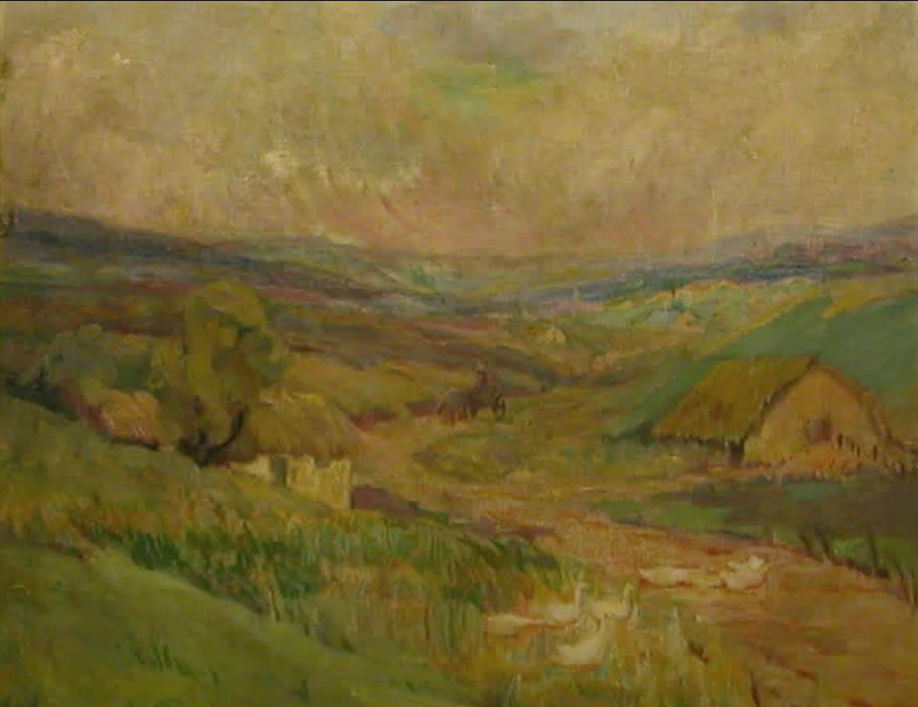
Victoria Noyes
Studied at the Art Institute of Chicago, Gussow and Julien Academy, Paris. She maintained a studio in Chicago doing portraits, oils, pen and ink work. Mrs. Noyes became a member of the Oak Park Art League in the mid 1930’s.
-
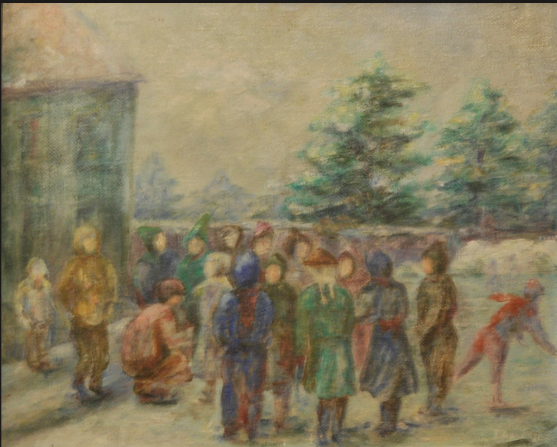
Edna Austin (1879 - 1964)
Born in Fergus Falls, Minnesota, Mrs. Austin came to Oak Park to teach Elementary school. Her husband, Henry Austin Jr., son of the founder of Austin, served as president of the town of Cicero’s School Board. (around the time Oak Park split from Cicero Township). Edna was a life member of the Oak Park Art League. She studied privately with Arnold Turtle, Fred Oswald, Cornelia Weyburn and Bruno Beghe. Mrs. Austin was an exhibiting member of the All-Illinois Society of Fine Arts and has work in the collection of the Nineteenth Century Woman’s Club. Edna was a great civic leader of Oak Park. She established the Oak Park Council of International Affairs and served on the board of the Immigrant’s Protective League.
-
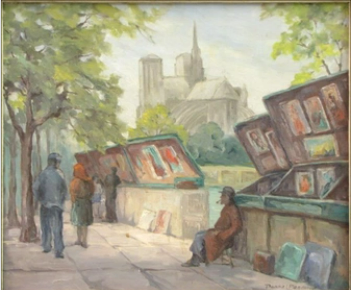
Donna Pasdeluop (1898 - 1987)
Born in Chicago, Ms. Pasdeluop studied with Fred Oswalt and James Eccles. She exhibited at the All Illinois Society of Fine Arts; 19th Century Club; received awards at the 19th Century Club as well as the Art League. She was formerly on Stage and radio in New York and Chicago. She served on the board of directors of the Art League, as Vice President and as President from 1952 to 1954.
-
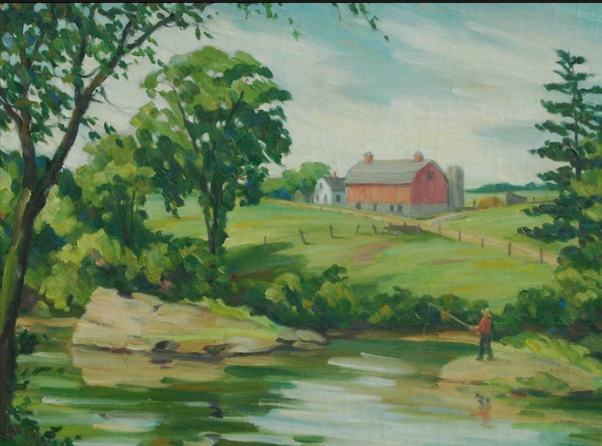
Helen Hudson Below (1887 - 1976)
Born in Redfield, South Dakota, Ms. Below graduated with honors from the Art Institute of Chicago. She was an illustrator of children’s books for Scots Foremann. In addition to teaching art in Wisconsin and Illinois for ten years; Mrs. Below taught adult and children’s classes at the Art League. She exhibited at the Art League since joining in 1923, receiving many prizes over the years.
-
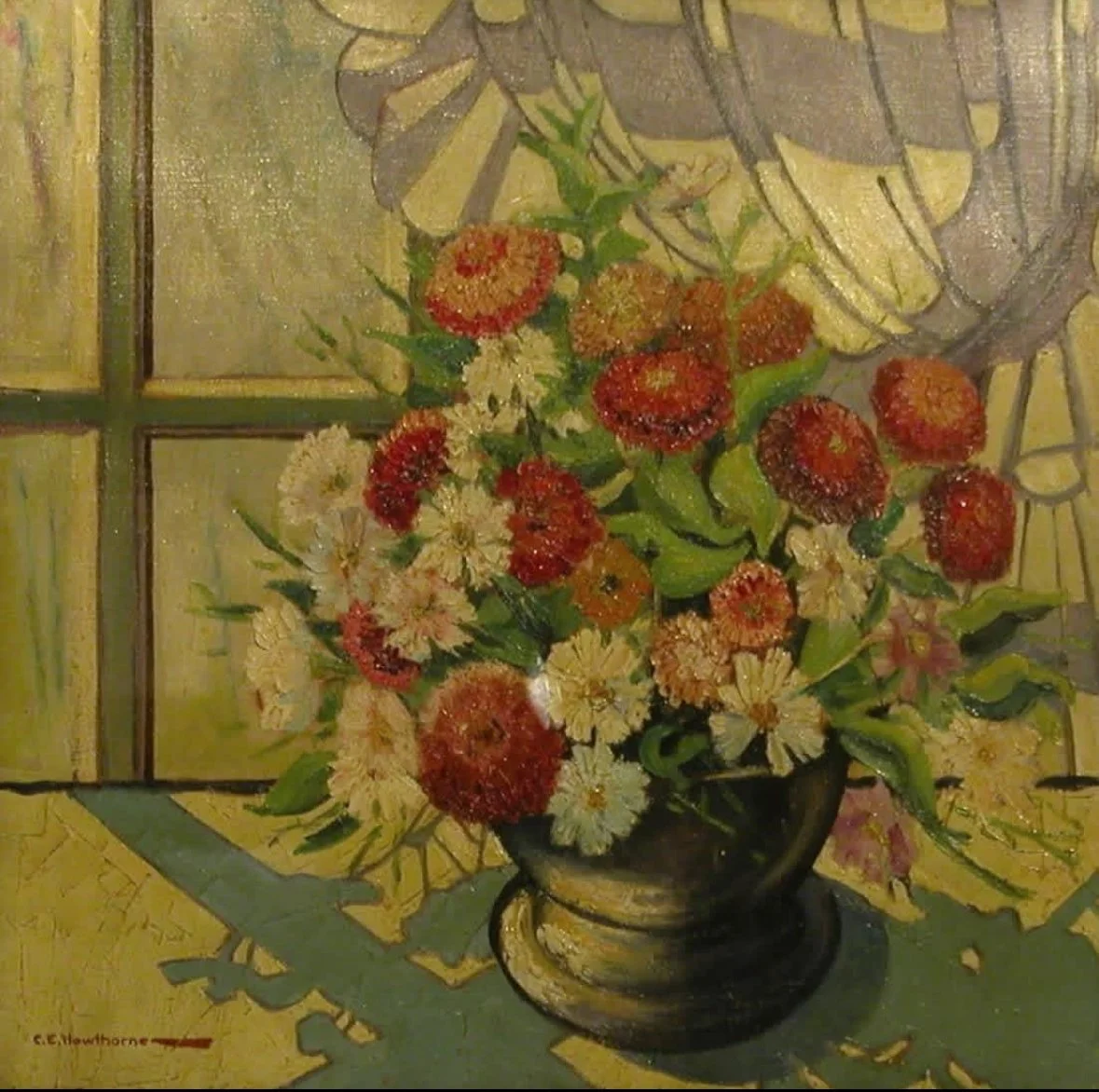
Cornelia Hawthorne (Connie Dowdakin)
Mrs. J. D Dowdakin was born in Maywood, Illinois. Graduated from the Art Institute of Chicago; studied in Provincetown, Massachusetts with Charles Hawthorne ( her uncle) at Cape Cod School of Art. Mrs. Dowdakin has exhibited at the Art Institute of Chicago, Rockford Museum and galleries in the Midwest and California; for a ten year period in the 40’s and 50’s she served at an artist/draftsman for the U. S army engineers; and served on the board of directors of the Art League.
-
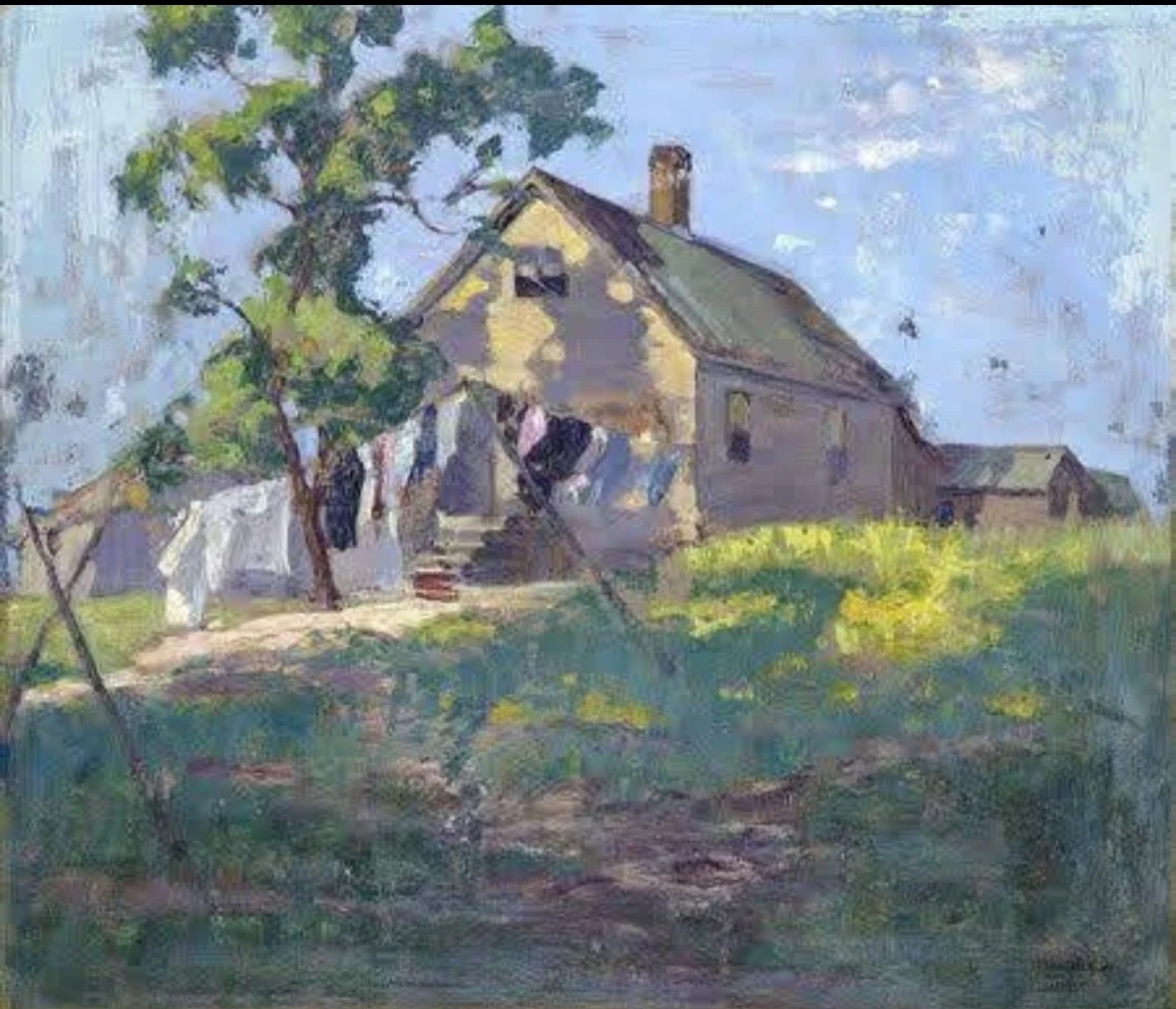
Andrew DoBos (1897 - 1985)
The picturesque little village of Lushina, Poland was the birthplace of Andrew DoBos. His family came to the United States in 1911. After the death of his father, Andrew DoBos took over the duties of head of the family at age 15. At the age of 21, he began studying art with Frederic grant in Chicago. He became a member of the Art League in 1926 and contributed paintings to be sold in order to purchase Oak Park Art League’s current building. Mr. DoBos was also a member of All Illinois Society of Fine Arts, Palette and Chisel Academy. He has had numerous one man shows throughout the Midwest and his represented in many collections including the Alumni collection of the University of Chicago.
-
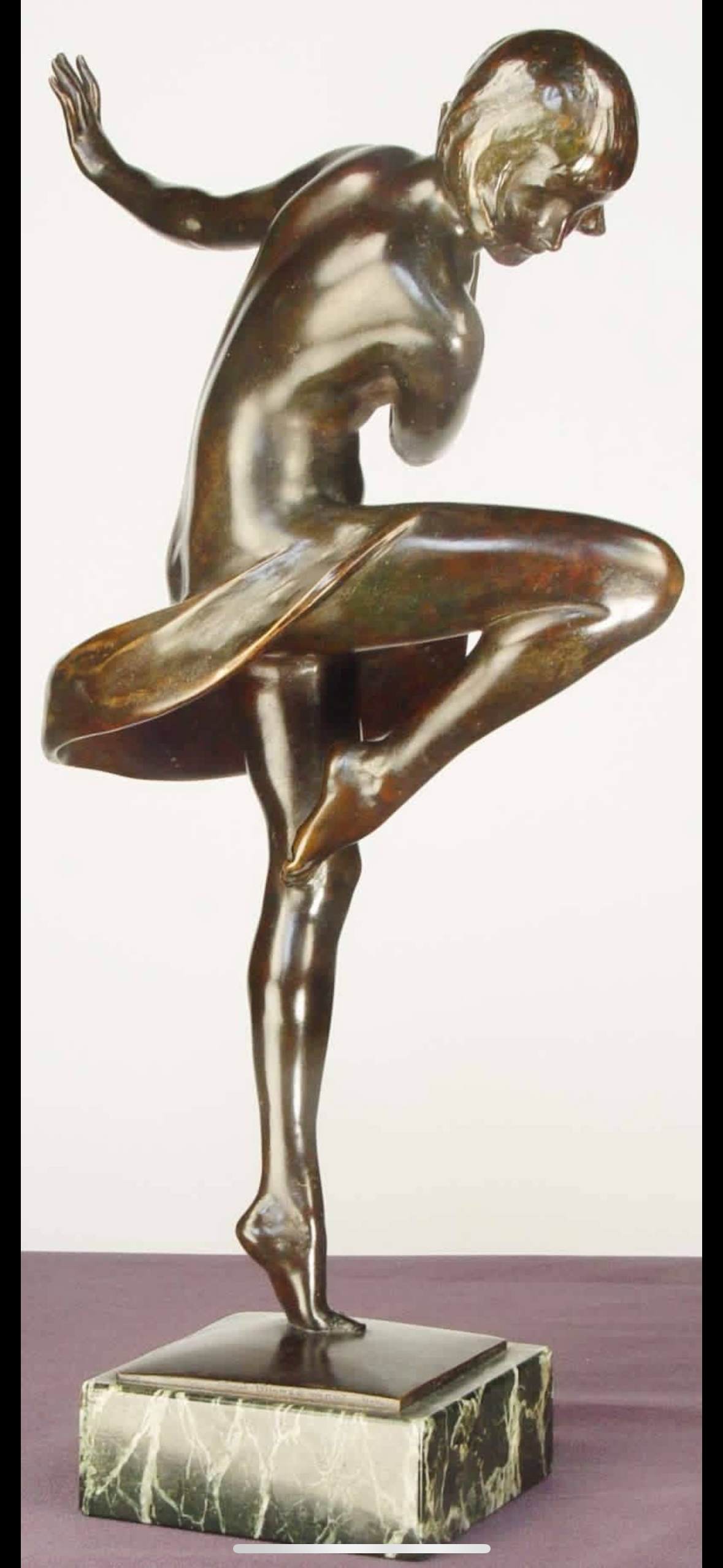
Emory P. Seidel (1881 - 1954)
Artist and sculptor was born in Baltimore, MD. He studied at the Pennsylvania Academy Fine Arts in Philadelphia and the Art Institute of Chicago. Seidel received the following awards: Peabody Prize at the Maryland Institute, Baltimore; St Paul Institute Prize and several awards for sculpture at the Art Institute of Chicago. He is best known for garden and fountain figures, groups in stone for decoration on bridges, and portrait figures of which one is the bust of composer Carrie Jacobs Bond. He was a member of the Chicago Painters and Sculptors, Cliff Dwellers and other clubs.
-
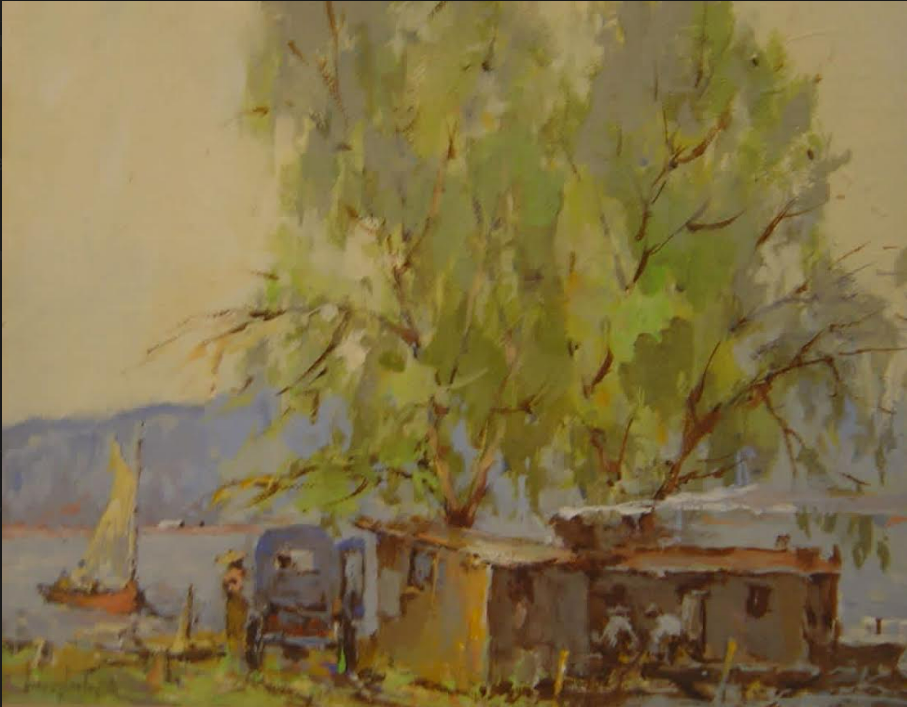
James Eccles (1885 - 1983)
Born in Chicago, attended Smith School of Art. Studied at the Art Institute of Chicago, Art Colony at Saugatuck Michigan, and the business Men’s Art Club of which he was a member. He was in charge of the Tuesday evening life class at the Art league and also a member of the board of directors. His work has been exhibited Milwaukee, Chicago, Berne, Indiana and Reading Pa. Mr. Eccles lived into his 90’s and continued to pain and show his work until his death. His work can be found in many local collections including the schools of Oak Park and River Forest.
-
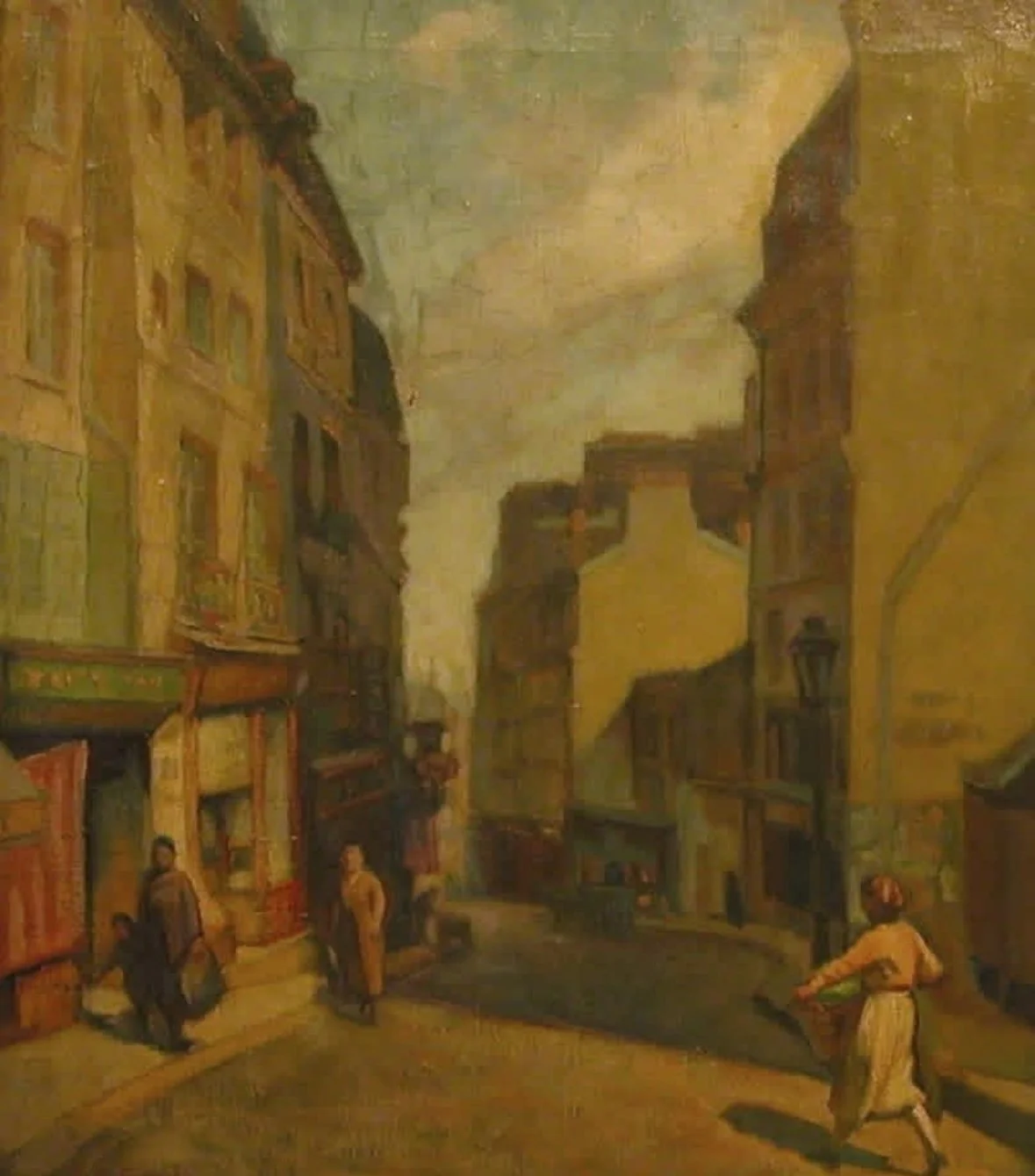
Richard Epperly (1891 - 1973)
Born in Tallula, Illinois Mr. Epperly studied at the Art Institute of Chicago. Worked with an advertising agency doing commercial art work until 1918 when he entered the army and served in France. He returned to France to study figure and composition at the Academie Moderne in Paris. Returned to the United States and resumed commercial art work doing illustration and cover designs. He was a Board member at the Art League and regular exhibitor. Had several one man shows at the Stevens and Drake Hotels. He was a Life member of the Springfield Art Association. In 1938 was awarded the American Legion Auxiliary’s award for his water color “Park near Notre Dame, Paris”. He’s represented in permanent collections of Springfield Art Association and the Logan Collection.
-
Helen Ehrman Corlett (1894 - 1978)
Born in Oak Park, Ms. Corlett graduated from Oak Park High School and Lasell College and the Church School of Art. She spent her summers studying art in Saugatuck, Michigan. Mrs. Corlett worked primarily in water color and exhibited at the Art League and All Illinois Society of the Fine Arts.
-
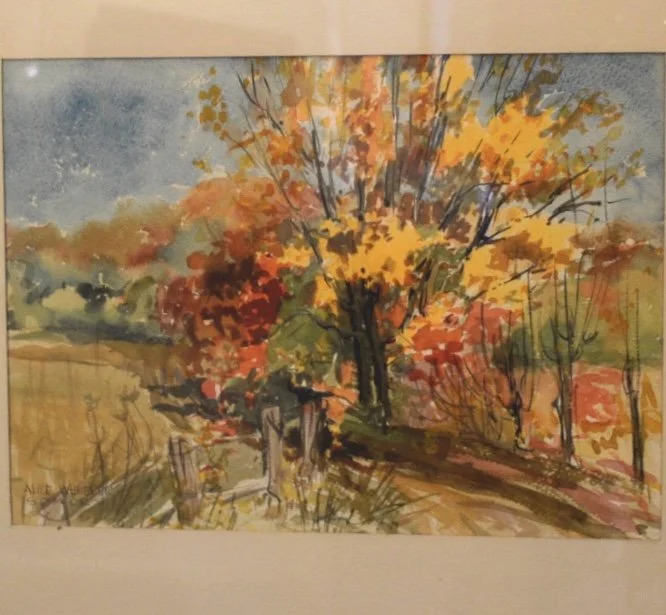
Alice Wheeler Somers
Born in Oak Park, Ms. Somers studied at the Academy of Fine Arts with Cornelia Weyburn for four years. She was a commercial artist before marrying. Mrs. Somers became a member of the Art League in the 1930’s.
By The Decades
2000’s - 2020’s
In September 2000 OPAL opened its satellite gallery at 149 Harrison Street with semi-solo shows for artist members.
OPAL collaborated with Sarah’s Inn and Community Response for a fundraiser and silent art auction to benefit each organization.
OPAL collaborated with Prairie Title and West Suburban Hospital to exhibit artist members’ work and expand our satellite galleries.
In 2019 OPAL updated its mission statement, launched a new website, re-established the yearly Artist Member Catalog and created new outreach programming, including Meet the Maker and Critique Night.
From March 2020 – May 2020 OPAL along with the rest of the world went into lock-down due to the COVID-19 Pandemic. OPAL re-opened in June 2020 with strict Covid protocols in place including a socially-distanced classroom plan, virtual gallery shows and online meetings.
Despite the pandemic, 2020 through 2021 was a time for growth and expansion including establishing the Family stARTs program in partnership with A House in Austin and Hephzibah Children’s Association as well as creating programs with Spoken Word, Everyday Activists, and a collaboration with Momenta Dance Company.
OPAL partnered with Kettlestings Tavern and Cross Function Workspace, both in Oak Park, to create more satellite gallery opportunities for our artist members.
OPAL launched our YouTube channel for virtual tours of OPAL’s exhibitions and videos of our special programs and events.
In FY 2020 OPAL secured $47k in grant revenue which was used for upgrading technology, producing artistic programs and paying staff salaries.
In 2021, OPAL continued its efforts to obtain state funding for much needed infrastructure repairs and building renovations, making significant headway in Nov 2021with its application submission to the Illinois Department of Commerce and Economic Opportunity.
1980 - 1990’s
In 1981 a new roof was installed, thanks to money raised by OPAL members.
Color ’86 was a juried show held at OPAL and was open to Chicago area artists. Over 600 entries were received and 83 artists were included in the show.
In 1988 OPAL celebrated 50 years at 720 Chicago Avenue with an exhibit of works by its founding members.
In 1990 OPAL featured an exhibit of Carl Krafft, founding president. The show featured paintings, photo albums and memorabilia loaned by the artist’s family.
Take a look at the 1994-1995 Annual Report
In 1996, in celebration of OPAL’s 75th anniversary, funds were raised to landscape the front grounds. A new flower garden was planted and a new sidewalk was installed.
In 1998 OPAL hired its first paid Executive Director, Jessica Mackinnon.
September 2000 the Art League opened its satellite gallery at 149 Harrison Street.
The Art League hired Sarah Coffey as Gallery Manager of the Harrison Street Gallery, and Christi Dallam as the Art League’s Assistant Director.
Alexandra Dymowska was hired in early 2001 to replace Sarah Coffey as the Gallery Manager for the Art League’s Harrison Street Gallery.
1960’s–1970’s
The Austin, Oak Park and River Forest Art League shortened its name to the Oak Park Art League (OPAL) in 1970.
OPAL celebrated its 50th anniversary in 1971 with an exhibition of works by famous members and redesigned the logo.
In 1979 OPAL’s furnace caught fire and was destroyed, causing the pipes, radiators and toilets to freeze! To recoup some of the money that was used to pay for the repairs, OPAL held a White Elephant Sale in June.
1940’s – 1950’s
The Art League published The Art League Book, a history and collection of works by Art League members.
The Art League began a picture rental program. For $12 a year ($1 a month), one could rent an oil painting or sculpture for their home. If they wanted to purchase it, the rental would go towards the sale price.
An auction of art by Art League members was held to raise money to purchase a piano.
The Art League began monthly tours of exhibitions. The public was invited to visit the gallery and receive a guided tour of the shows.
The Austin family donated a complete kitchen and upgraded the electrical system as a memorial to Edna Austin.
The Art League had a sale of oil and watercolors. Over 300 were on display, and sold for between $5 and $50.
1930's
In 1937 the Art League buys the property at 720 Chicago Avenue, designed and built by Art League member E. E. Roberts.
In 1938 the Art League opened its new home at 720 Chicago Avenue. The exhibition was artwork donated by members, and all sale proceeds went to the building fund to help pay off the costs of remodeling the building.
To celebrate the one-year anniversary in the 720 Chicago Avenue building, the Art League presented an exhibit of work by Carl Krafft.
The annual Garden Party event funded the Art League’s scholarship program. In 1932 the League becomes a tenant of the newly completed 19th Century Women’s Club, renting the top floor.

The Art League Book
1940
This book was published by the Oak Park Art League in 1940 featuring history, member's work and a look at the Art League just after moving into its permanent home at 720 Chicago Ave.
Centennial Yearbook
1921 - 2021
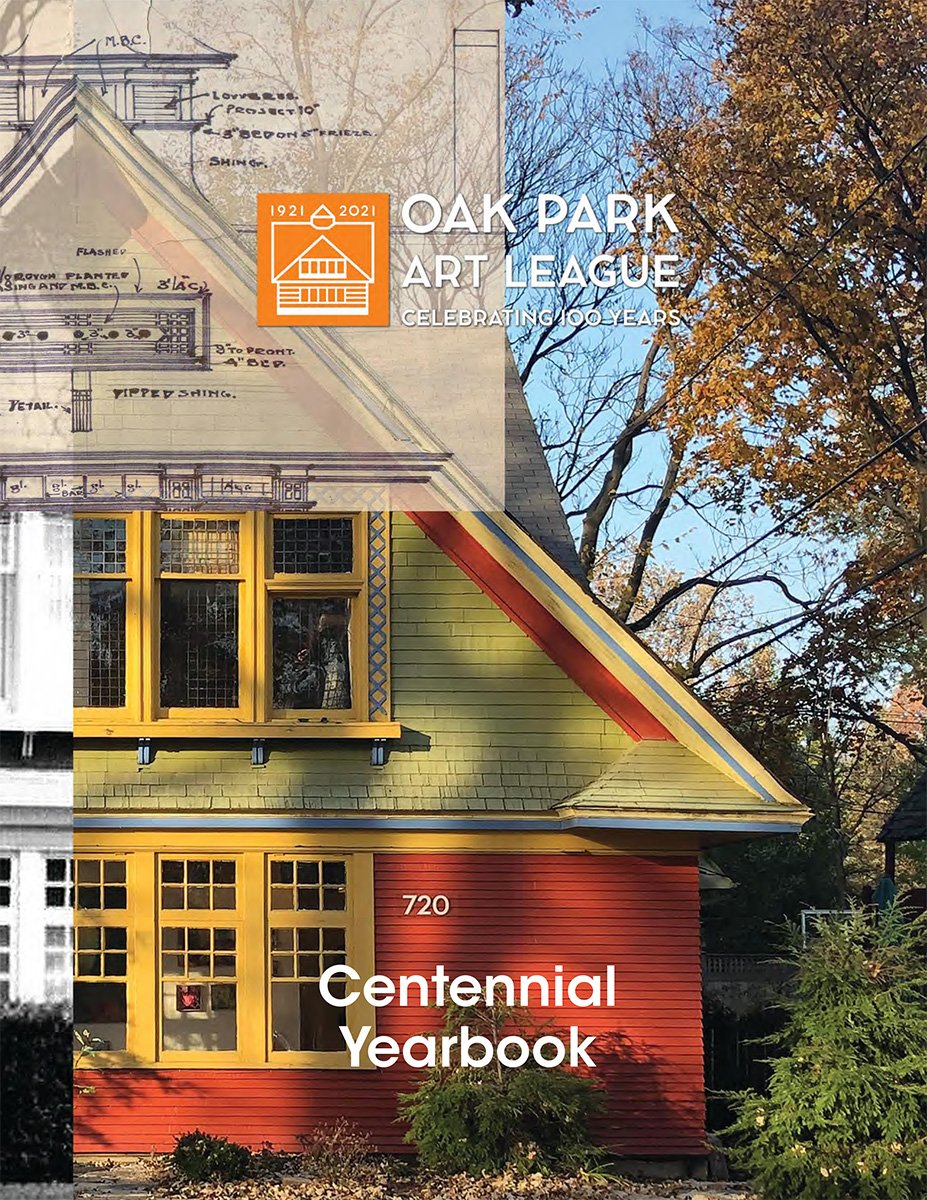
The Oak Park Art League Centennial Yearbook honors the history of the Oak Park Art League while celebrating its 100th year showcasing exhibits, classes, special events, and art member profiles.
View and download the PDF for free. Purchase a hardcopy here